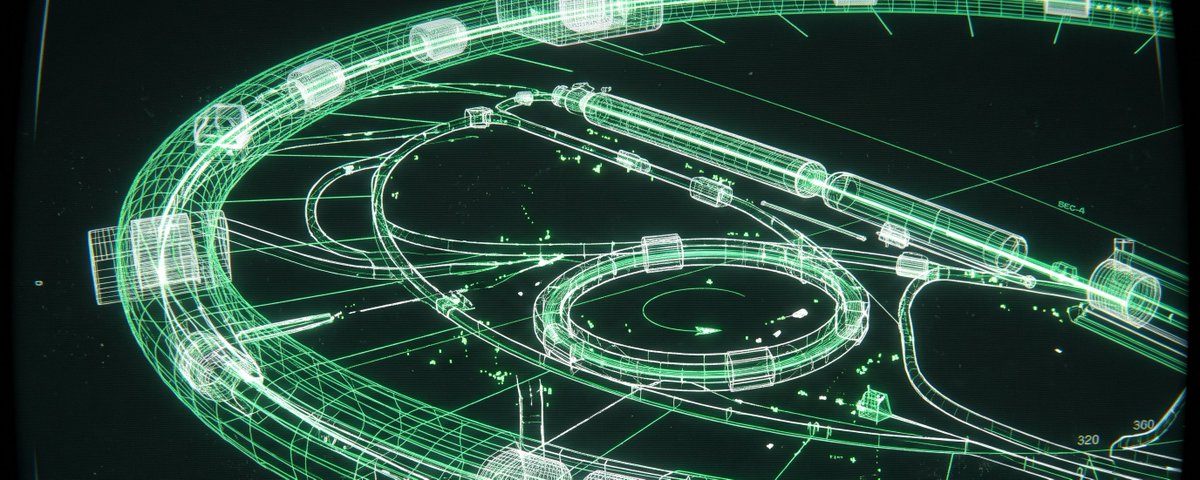
Anthropic co-founder Jack Clark published a science fiction story titled 'Machine architecture and the objectivity crisis of Machine Hermeneutics' on X on November 27, 2026 — an expanded version of the 'Tech Tales' column from his Import AI newsletter 482. In the text, he asserts that 'the singularity has already begun': AI systems are accelerating science to such an extent that it may take humans tens or hundreds of times longer to comprehend mathematical works created by machines than it takes machines to produce them.

What happened
In the story, Clark describes a fictional discipline called 'machine hermeneutics' — the interpretation of AI scientific discoveries and the translation of machine reasoning into human language. The concept of 'didactic architecture' is also introduced: buildings constructed to accelerate human understanding of machine science, along with the metric TTHUE (time-to-human-understandable-explanation). The story first appeared in the 'Tech Tales' column of Import AI newsletter 482 on November 23, 2026, and Clark published its expanded version on X on November 27, 2026.
Context
Clark is one of the key figures at Anthropic, and his Import AI newsletter has long served as a platform for observations on the state of the industry. The publication belongs to the genre of the fictional essay-probe, not a scientific article: the text contains no data, methodology, experiments, or reproducible metrics. The only quantitative construct — the TTHUE metric — is introduced within the story without a defined scale, measurement method, or validation. The estimate of 'tens or hundreds of times' is given without specifying a corpus of 2026 mathematical works, a 'purely human' baseline rate, or a counterfactual comparison.
Why this matters for the industry
Clark's thesis points to a shift in the bottleneck of scientific progress from the generation of results to their verification and interpretation. If AI creates mathematical and scientific works faster than humans can verify them, value will accrue to 'conceptual verification' processes, AI proof auditing tools, and new research roles, not just the models themselves. For startups, this is a signal of an emerging market for verifying machine science; for teams already building evals, reasoning tracing, and explainable reports, it is an argument to strengthen this layer. The terms 'machine hermeneutics' and TTHUE may become convenient shorthand for describing the verification problem.
Why this matters for users
This is not a product announcement, but a fresh perspective from one of Anthropic's key figures on the idea that 'the singularity has already begun.' The story can be read for free in Clark's X post and in Import AI newsletter 482. The thesis on the gap between 'machine time to discovery / human time to understanding' is a useful benchmark when evaluating AI-for-science news: when selecting such tasks, it is important to explicitly budget time and resources for verifying results, not just for inference.
What is currently unknown / limitations
The publication is a fictional text, not a research paper: it contains no data, methodology, experiments, or reproducible metrics. The TTHUE metric is introduced without a defined scale, measurement method, validation, or inter-rater reliability check. The 'tens or hundreds of times' estimate is illustrative rather than measured: no corpus of 2026 works, human baseline rate, or counterfactual comparison is specified. 'Machine hermeneutics' is described as a future discipline — without a corpus of machine reasoning, a quality translation benchmark, or interpretation accuracy metrics.
Sources
- Jack Clark (@jackclarkSF) — X post with the story 'Machine architecture and the objectivity crisis of Machine Hermeneutics'
- Import AI 482: Huawei kernel benchmarks; airborne drone detection; and a national lab's AI science benchmark (Tech Tales column)
Author
Look at AI, editorial team